

AI Personalization ROI for B2B Content: 2026 Data and Playbook
Build a CFO-defensible case with Nexoris Technologies' 15 to 25 percent conversion lift figure.
 Chinedu Nwogu
Decide whether to build or buy your customer service automation by comparing current development costs ranging from 300,000 to 1,500,000 Naira. Nexoris Technologies provides performance benchmarks showing that a trained bot can deflect up to 70 percent of repetitive inquiries.
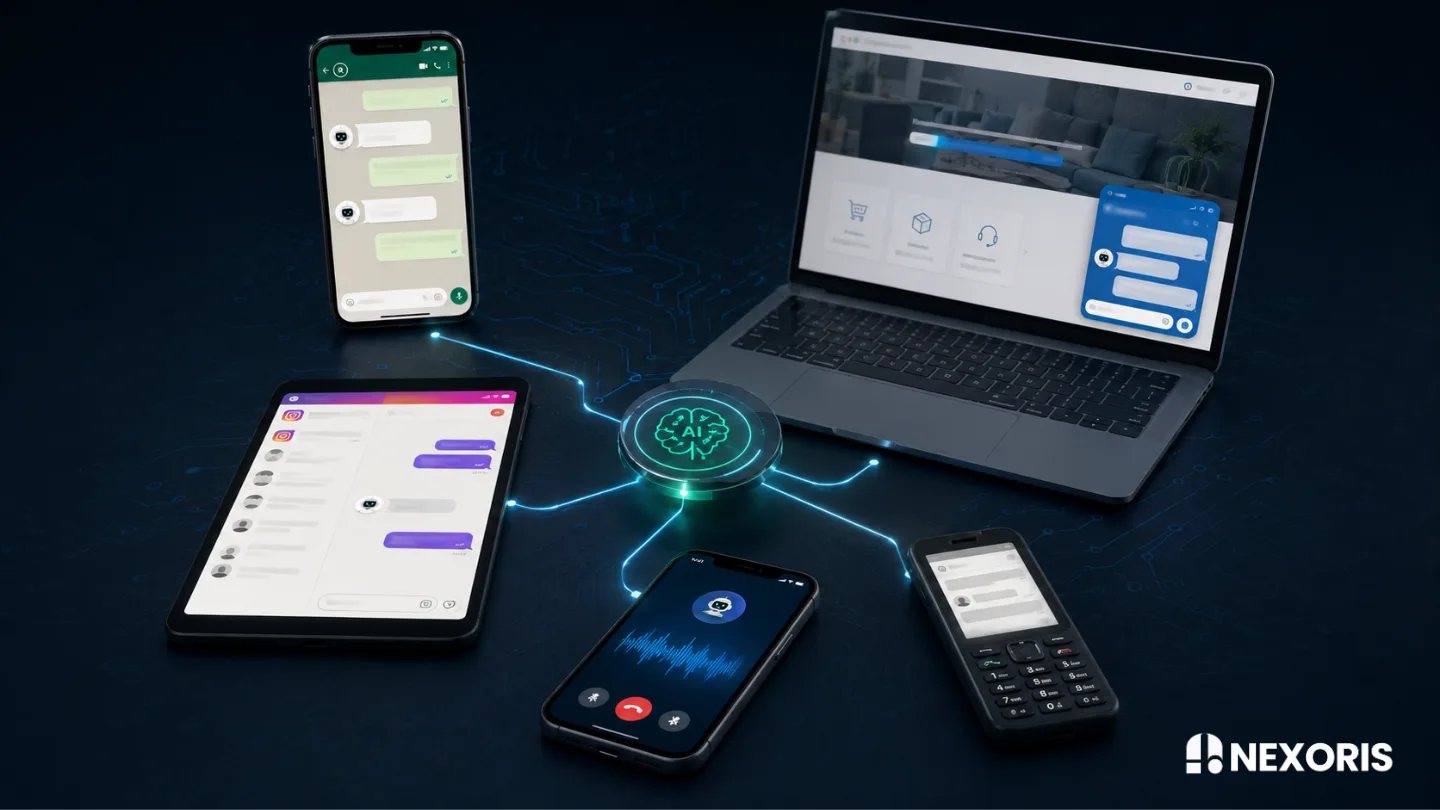
If your team is drowning in repetitive WhatsApp messages, missed leads after hours, or support tickets that all ask the same five questions, a chatbot is the obvious next step. The harder question is whether to buy a ready-made one, build a custom one, or do something in between, and how the new Meta pricing changes the maths.
This guide gives you the real cost, the real trade-offs, and a clear way to decide based on the size of your business, the channels you serve, and the rules you have to follow.
The figures and patterns here come from chatbot projects Nexoris Technologies has built for clients between 2025 and 2026, the Meta WhatsApp Business Platform documentation, the Nigeria Data Protection Act 2023, the Nigerian Communications Commission, DataReportal Digital 2026 Nigeria, and current public pricing pages from Paystack, Flutterwave, and the major large language model providers.
A working AI chatbot for a Nigerian business sits in three price tiers, depending on how much it has to do.
| Path | Build cost | Monthly running cost |
|---|---|---|
| SaaS plan (off-the-shelf) | ₦0 to ₦150,000 | ₦20,000 to ₦150,000 |
| Hybrid (SaaS + your knowledge base + integrations) | ₦300,000 to ₦800,000 | ₦80,000 to ₦250,000 |
| Custom build (your stack, your data, your model controls) | ₦600,000 to ₦1,500,000 | ₦150,000 to ₦300,000 |
A bot trained on your own content, connected to WhatsApp and your website, with a clean handover to a human agent, sits comfortably in the hybrid tier for most Nigerian SMEs and mid-market businesses.
The short answer is that customers expect instant replies, and human teams cannot be online at 11 p.m. on a Sunday. Three things have made 2026 the year chatbots stopped being a "nice to have" in Nigeria.
The first is reach. According to NCC industry data published in early 2026, Nigeria had 151.6 million internet subscribers in January 2026, the vast majority connecting through mobile. DataReportal's Digital 2026 Nigeria report puts WhatsApp among the top messaging platforms in the country by usage, with most Nigerian internet users on it daily. If your customers will not download your branded app, they will still send you a WhatsApp message.
The second is the new Meta pricing. On 1 January 2026, Meta moved the WhatsApp Business Platform from per-conversation to per-template message pricing. Service messages from customers stay free within the 24-hour window. Utility templates sent inside that window are free.
Outside the window, marketing, utility, and authentication templates are billed per message, with volume discounts now available on utility and authentication categories. The headline effect for Nigerian businesses is that customer service deployments are structurally cheaper than they were in 2024.
The third is the maturity of large language models. The 2026 generation of models handles African English, Nigerian Pidgin, and major Nigerian languages reasonably well, with locally trained options closing gaps on accent and idiom. Moniepoint launched M, an AI chatbot for Nigeria's informal economy, in late 2025, joining Zenith Bank's ZiVA and Airtel's Airtel Assist on the list of serious deployments by major Nigerian institutions.
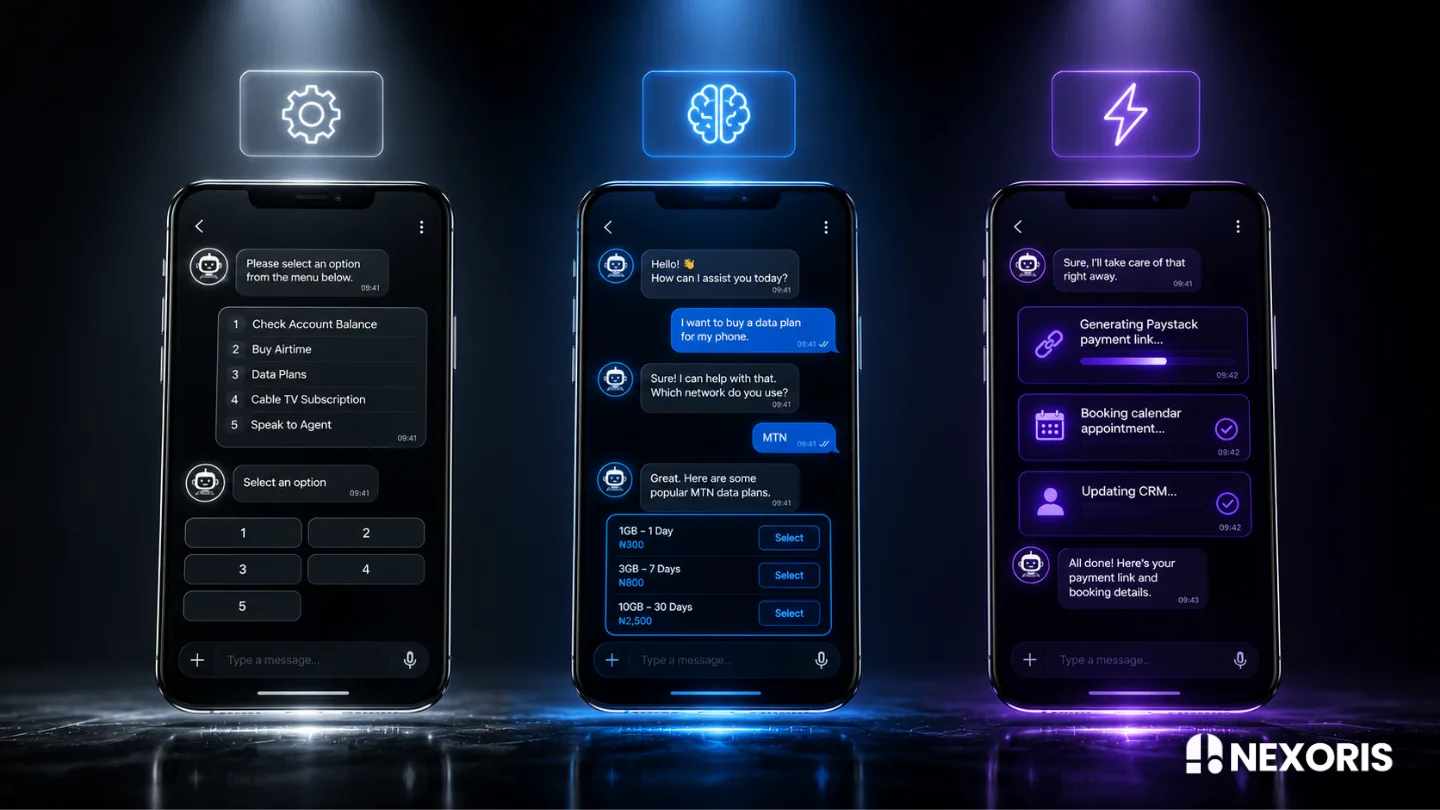
These three labels are not the same thing, and the price difference is large. Buyers ask for chatbots and end up paying for agents, or pay for agents and only get rule-based bots. Here is the difference in plain English.
A rule-based chatbot follows a fixed script. It shows menus, waits for a button click, and routes the user down a defined path. It cannot handle anything off-script. Build cost is low, running cost is low, and the experience feels like a phone IVR.
An AI chatbot uses a large language model to understand free-form questions and reply in natural language. It is grounded in your own knowledge base (FAQs, policies, product catalogue) so the answers match your business. It can hand over to a human when it does not know.
An AI agent does everything an AI chatbot does and also takes actions. It books an appointment, opens a ticket, generates a payment link, looks up an order, or updates a CRM record on the user's behalf. This is where 2026 chatbot work is heading.
| Type | What it does | Right for |
|---|---|---|
| Rule-based bot | Menu-driven scripts, no AI | Simple FAQs, pre-AI workflows |
| AI chatbot | Free-form Q&A grounded in your content | Customer support, lead capture |
| AI agent | Q&A plus actions across your systems | Bookings, payments, account changes |
For most Nigerian businesses in 2026, the right answer is an AI chatbot now and an AI agent in the next phase, once you see where the volume is.
A 2026 AI chatbot is not one piece of software. It is six pieces working in sequence, and knowing the sequence helps you understand what you are paying for and where things break.
A customer sends a message on WhatsApp, your website, or another channel. The message hits the channel layer first. For WhatsApp that is your BSP. For your website it is a chat widget. For Instagram and Facebook it is the Meta Messenger API. The channel layer passes the message to your backend over a webhook.
The backend pulls the customer's history if it has any, then runs the retrieval step. This is where RAG searches your knowledge base for the passages most likely to answer the question. The top three to five passages are picked and sent on with the original message.
The LLM step comes next. The model receives the question, the retrieved passages, and a system prompt that tells it how to behave (tone, escalation rules, what to refuse). It generates a draft reply.
If the question needs an action, like checking an order, generating a payment link, or booking an appointment, the backend calls the right integration (Paystack, your CRM, your booking system) and feeds the result into the reply.
The reply goes back through the channel layer to the customer. The whole round trip takes one to three seconds on a healthy setup. If the confidence score is too low, or the user asks for a human, the conversation is handed off with the full transcript attached.
The right path depends on three questions: how many conversations you handle, how regulated your data is, and how deeply the bot needs to plug into your other systems.
| Factor | SaaS | Hybrid | Custom |
|---|---|---|---|
| Time to launch | 1 to 2 weeks | 3 to 6 weeks | 6 to 12 weeks |
| Data control | Vendor's | Mostly yours | Fully yours |
| Integration depth | Limited | Most common ones | Anything you need |
| Best for | FAQs and lead capture | Real customer support | Regulated workflows |
The real cost has four parts: the build, the platform fees, the message fees, and the model fees. Here is what each one looks like.
The BSPs Nigerian businesses can realistically use in 2026 fall into a few bands:
| BSP | Pricing profile | Best fit for |
|---|---|---|
| 360dialog | Lower BSP markup, direct WhatsApp partner | African and SME deployments |
| Twilio | Higher BSP fee, strong documentation | Engineering-heavy teams |
| Gupshup | Mid-range, strong template tooling | Mid-market and retail |
| AiSensy | Low entry price, easy onboarding | Smaller Nigerian SMEs |
Pricing and standing change. Verify current rates and template approval times with each provider before locking a contract.
| Item | 1k chats/mo | 5k chats/mo | 20k chats/mo |
|---|---|---|---|
| Build (one-time) | ₦500,000 | ₦700,000 | ₦1,200,000 |
| BSP fees (12 months) | ₦300,000 | ₦600,000 | ₦1,500,000 |
| Meta template fees | ₦30,000 | ₦150,000 | ₦650,000 |
| LLM token fees | ₦480,000 | ₦1,200,000 | ₦3,000,000 |
| Hosting and maintenance | ₦480,000 | ₦720,000 | ₦1,200,000 |
| 12-month total | ₦1,790,000 | ₦3,370,000 | ₦7,550,000 |
The build is the smallest line at every volume. Token and BSP fees scale faster than people expect.
As of 1 January 2026, Meta charges per delivered template message rather than per conversation. There are four message categories, each priced differently.
A Click-to-WhatsApp (CTWA) ad is a Facebook or Instagram ad that opens a WhatsApp conversation when the user taps it. Under Meta's 2026 rules, every CTWA tap opens a 72-hour free entry window during which the business can reply to that customer at no Meta message cost.
The practical effect is that paid acquisition turns into free service traffic. Every Naira spent on a CTWA campaign opens a three-day window where a chatbot can answer questions, qualify the lead, take a payment, or book an appointment with no template fees on top of the ad spend.
The 2026 Nigerian playbook looks like this. Run small, well-targeted CTWA campaigns daily rather than large weekly bursts. Let the chatbot handle the volume inside the 72-hour window. Keep marketing templates (the most expensive category) for re-engagement of customers whose window has closed.
Most well-run deployments end up with 70 to 85 percent of message volume in free windows, paying Meta only for the small slice of marketing pushes that genuinely need a template.
The practical playbook for Nigerian businesses: treat WhatsApp as a reactive channel with a chatbot doing the heavy lifting on free service messages, use CTWA ads to open free 72-hour windows, and keep marketing template usage targeted rather than blasted.

Most Nigerian businesses get the best return from one or two channels, not five. Here is the order most projects ship in.
For a typical Nigerian SME or mid-market business in 2026, WhatsApp plus website chat covers 80 to 90 percent of useful interactions.
A chatbot is only as good as the content it stands on. The most common reason a Nigerian deployment underperforms is a thin knowledge base, not weak technology.
Three steps make the difference.
A 200-question knowledge base built once, kept fresh quarterly, is the difference between a bot that deflects 60 percent and one that deflects 20 percent.
The single biggest reason AI chatbots embarrass Nigerian businesses is hallucination, where the model invents a confident answer that is not in your content. The fix is a technique called Retrieval-Augmented Generation, or RAG.
In a RAG setup, the bot is not free to answer from the model's general knowledge. Every time a user asks a question, the system pulls the most relevant passages from your knowledge base, then asks the LLM to generate an answer using only those passages. If nothing relevant is found, the bot says it does not know and offers to hand the conversation to a human.
A serious 2026 chatbot for a Nigerian business should be RAG-grounded, with a confidence score on every answer, an audit log of which passages were used, and a clear "I do not know, let me hand you over" path when the score is too low. Without these, the bot will hallucinate sooner or later, and the first time it does it in a customer support conversation about money, the cost is more than any year of SaaS fees.
A chatbot that only speaks formal English misses how Nigerian customers actually write. Plenty of messages come in Pidgin, with Yoruba, Hausa, or Igbo phrases mixed in. Modern large language models handle this better than they did two years ago, but they still need help.
Three things make a multilingual Nigerian bot work. The first is a clear language scope, decided at the start, so you train and test for the languages the bot will actually see. The second is a knowledge base in the same languages, so the bot has phrases to match against, not English ones translated badly. The third is a tested handover rule, so when the bot is unsure, it routes the customer to a human agent who speaks the same language.
For voice, locally trained automatic speech recognition and text-to-speech models handle Nigerian accents better than generic foreign tools. If you serve a customer base that prefers voice notes over typing (very common in Nigeria), this is worth budgeting for.
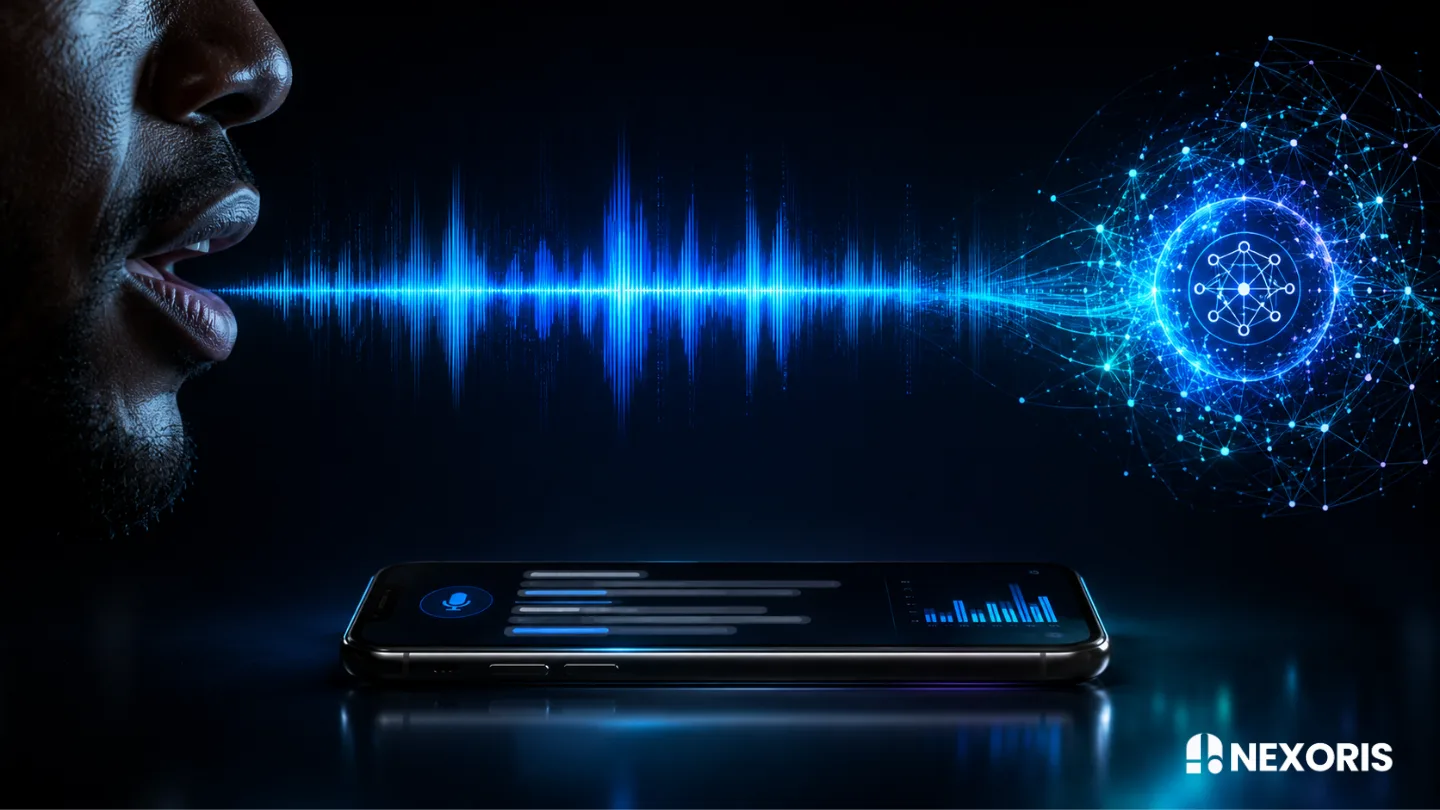
Voice AI moved from experimental to deployable in 2025 and is now a real option for Nigerian businesses with high call volume. The category covers AI that picks up phone calls, holds a natural conversation, books appointments, takes orders, and hands over to a human when needed.
A voice AI tier on top of a Nigerian WhatsApp and website bot typically adds ₦300,000 to ₦900,000 to the build and ₦80,000 to ₦300,000 a month in running costs. The economics make sense for call centres, banks, telcos, healthcare networks, and any business spending more than ₦500,000 a month on inbound phone support.
The trade-offs to know. Latency matters more on voice than on text. Nigerian accent recognition still benefits from locally tuned models. Compliance under NDPA still applies because phone transcripts are personal data. Phone numbers and outbound calling are subject to NCC rules.
Voice AI works best as a phase-two project, after the text chatbot has shown deflection in the data.
A chatbot processes personal information. Names, phone numbers, account references, complaints, sometimes ID numbers and health details. All of that is regulated under the Nigeria Data Protection Act 2023, enforced by the Nigeria Data Protection Commission.
Five obligations matter most for chatbot deployments.
Where a chatbot makes decisions that significantly affect a customer (approving a loan, blocking an account, declining a claim), NDPA 2023 Section 37 requires that the customer can request human review and contest the outcome. Build the human escalation path in from day one rather than retrofitting it after a complaint.
A small compliance package baked into the build (consent flow, retention policy, audit logs, role-based access, breach response runbook) costs less in design than it does after a complaint or a regulator visit.
A chatbot that only answers FAQs is useful. A chatbot that books appointments, looks up orders, processes payments, and updates your CRM is the one that pays for itself. Five integrations show up in most Nigerian deployments.
For a deeper look at how these integrations are built and managed, see our custom software development services .
A hybrid AI chatbot in Nigeria goes from signed scope to live deployment in roughly six weeks. The schedule below is the one Nexoris Technologies uses on most mid-market builds. SaaS-only projects compress this to one to two weeks. Custom builds in regulated industries stretch it to eight to twelve.
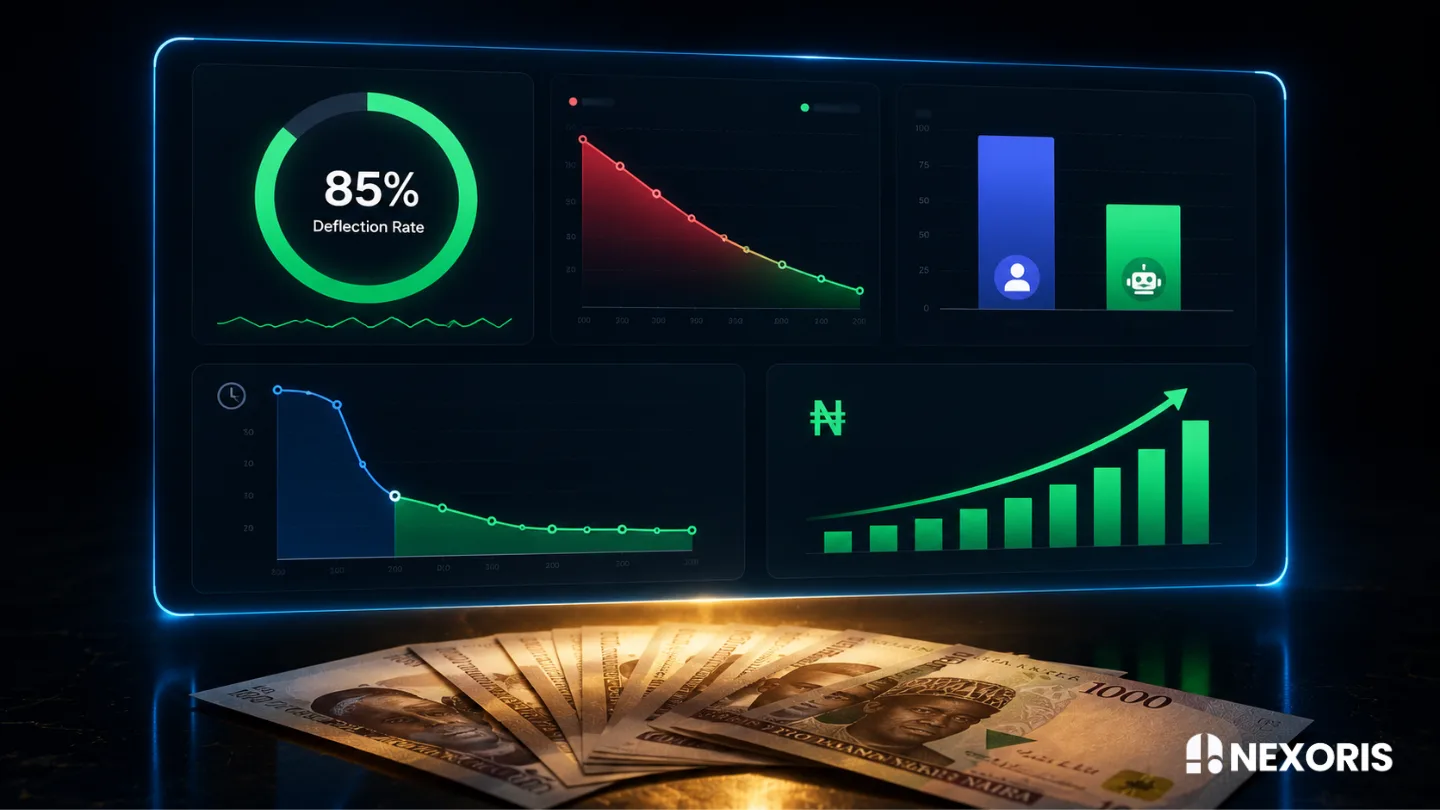
Five numbers tell you whether a chatbot is paying for itself.
A 200-staff Nigerian fintech with three customer support agents handling 6,000 WhatsApp conversations a month. The average human handle time is 8 minutes. Fully loaded cost per agent-hour is ₦4,500.
Pre-bot monthly cost: 6,000 × 8 ÷ 60 = 800 hours × ₦4,500 = ₦3,600,000 a month.
After deploying a hybrid chatbot deflecting 55 percent of conversations:
Bot handles 3,300 conversations.
Humans handle 2,700 × 8 ÷ 60 = 360 hours × ₦4,500 = ₦1,620,000.
Bot running costs: ₦400,000 a month.
Post-bot monthly cost: ₦2,020,000. Monthly saving: ₦1,580,000. Annual saving: ₦18,960,000. The build paid back in roughly six weeks.
These numbers vary by industry and conversation type, but the shape holds.
Short examples to make the cost ranges and ROI shape concrete.
Most failed chatbot projects fail for the same six reasons. Knowing them in advance is the cheapest way to protect the investment.
The vendor checklist in the next section is structured to surface most of these risks before you sign.
Send any provider these ten questions before you sign. The quality of the answers tells you everything.
A serious provider answers all ten in writing without hesitation. The wider criteria for picking a software partner, beyond chatbots, are covered in how to choose a software development company in Nigeria, with a fuller list of vetted teams in our best software development companies in Nigeria round-up.
The Naira figures and deployment patterns here come from chatbot projects Nexoris Technologies has built for Nigerian and pan-African clients between 2025 and 2026. Meta pricing references reflect the per-template message model effective 1 January 2026. Nigerian market context comes from the Nigerian Communications Commission's industry data published in early 2026 and DataReportal's Digital 2026 Nigeria report.
Compliance references draw on the Nigeria Data Protection Act 2023 and the Nigeria Data Protection Commission's General Application and Implementation Directive. Currency-sensitive items use Central Bank of Nigeria official rates. All public sources were checked at the time of writing.
Chinedu Nwogu is the Founder and CEO of Nexoris Technologies and a specialist in SEO, GEO, and AEO with 7 years of experience in software and digital products. He uses this technical background to help Nigerian businesses navigate the costs, regulatory requirements, and platform pricing models involved in deploying AI chatbots.
Chinedu Nwogu is a fact-checker with 7 years of experience and the founder and CEO of Nexoris Technologies, where he specializes in SEO, GEO, AEO, software, and digital products. He uses his background in building chatbot projects and managing digital product stacks to explain the costs, operational requirements, and regulatory compliance needed to deploy AI customer service tools in Nigeria.
Build a CFO-defensible case with Nexoris Technologies' 15 to 25 percent conversion lift figure.
Chinedu Nwogu